




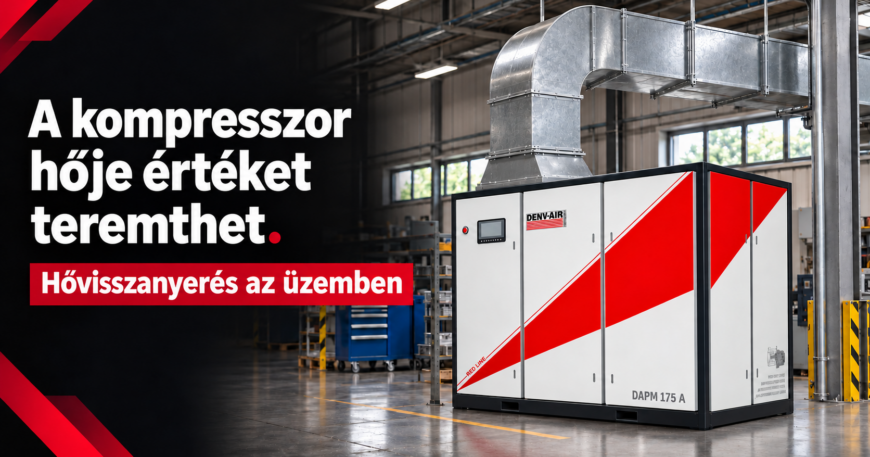
A compressor produces compressed air, but it also generates heat in the process. During the heating season, that heat can be especially valuable. In this article we look at what compressor heat recovery means in practice, where the recovered heat can be used, and what data you need for a well-founded decision.
In an industrial plant it is natural to monitor a compressor’s energy consumption, operational reliability and maintenance needs. What happens to the heat generated during operation, however, often gets less attention. Yet it is worth asking: where does this heat go, and is there a task in the plant where we could put it to use?
According to the professional guidance of Natural Resources Canada, a Canadian government agency, around four-fifths of the energy used by a compressor is converted into heat. The guidance therefore specifically highlights the opportunity of heat recovery: with the right technical solution, the heat generated can be used for process applications, space heating or water heating.
This figure alone is food for thought. Its practical value, however, comes from examining what it means in your own plant.
What does 80% mean in practice?
If a compressor uses 100 kWh of electrical energy over a given period, the guideline figure above suggests that roughly 80 kWh of heat may be generated. This does not automatically mean that all 80 kWh can be used, nor that the same amount of savings will appear on the heating bill.
We are talking about three different quantities:
- the heat generated,
- the heat that can technically be recovered,
- and the heat actually used.
A significant amount of heat may be recoverable from the equipment, while the plant only needs part of it. Heat demand and compressor operation may also fall into different periods. And transferring the heat to the point of use can involve losses and costs as well. That is why heat recovery should always be evaluated on the basis of the entire system and real operating data.
Where does the compressor’s heat go?
The equipment’s cooling system removes heat from the media that warm up during compression. How this happens depends on the compressor design, its cooling method and the associated equipment.
- In air-cooled systems, a large share of the heat leaves with the cooling air. If this warm air is discharged directly outdoors, it may remain unused from the plant’s point of view.
- In other designs, the heat can be transferred to a water circuit through a suitable heat exchanger. In this case, you need to assess which tasks the available temperature and heat output are suitable for.
The compressor type, load and technical condition all affect the possibilities. The suitability of a given solution must therefore be checked for each unit.
Where can the recovered heat be used?
Supporting space heating
During the heating season, a workshop, warehouse or production area may need exactly the heat that the compressor generates anyway. With the right design, directing the warm cooling air in a controlled way can contribute to heating the space. However, air quality, the purpose of the room, ventilation requirements and the compressor’s permissible operating conditions all matter here. Not all warm air can be routed into just any room.
Preheating water
A properly designed heat recovery circuit can support tasks where colder water needs to be heated to a higher temperature. In such cases, the recovered heat can reduce the energy demand of the next heating stage.
Process applications
These may also be an option, if the temperature and operational safety requirements of the given process are compatible with the available heat.
The decisive question is always the same: is there a real heat demand at the right temperature and at the right time?
Why does operating time matter?
Two compressors with the same output can have very different heat recovery potential. One unit runs only for short periods each day with a varying load. The other runs continuously across several shifts. Even if their rated output is similar, the amount of heat available over a year and its predictability will differ.
Moreover, the fact that a compressor is switched on does not tell the whole story. Actual load and control method also affect energy use and heat generation. For an assessment, it is therefore useful to know when the compressor runs, at what load, and how this varies over the day, week or year. The more precisely we understand its operation, the more realistically we can determine the usable amount of heat.
Timing matters as much as quantity
Imagine a plant where the compressor runs on weekdays during production. If hot water or process preheating is needed in the same period, the overlap in timing can be favourable. The situation is different if the heat is mainly generated during the day while demand occurs at night.
Seasonal differences raise a similar question. A compressor can generate a significant amount of heat in summer too, when space heating is not needed. In that case, you need to examine whether there is another use, whether heat storage is justified, and how unused heat is safely removed.
The system must work properly even when the heat-consuming side is not taking any energy. Compressor cooling and operational safety are a basic requirement in every operating situation.
What data do you need for a meaningful assessment?
1. Current operation:
- What is the compressor’s actual electricity consumption?
- How many hours a year does it run, and how does its load vary?
- How is the cooling system designed, and is there a manufacturer-supported heat recovery option?
2. The demand side:
- Where is there heat demand in the plant, and what temperature is required?
- How much heat is needed, and in which periods?
- How far is the point of use from the compressor room?
3. The existing heating or process system:
- What energy source does it use, and how efficiently does it produce the required heat?
- How could it accept the new heat source?
These data make it possible to prepare a sound technical and economic calculation.
Payback is determined by the energy actually replaced
The value of heat recovery is shown by how much previously purchased energy it can replace. This requires taking into account the cost of current heat generation, the duration of use, transfer losses and the energy needed to run the new system.
On the investment side, in addition to the heat exchanger, piping, ductwork, pumps, controls, fittings or other accessories may be needed. Their cost varies from site to site. Additional operating and maintenance tasks must also be factored into the evaluation.
That is why a general payback promise can easily be misleading. The same technical idea can be a favourable investment in one plant and an opportunity of limited use in another. A calculation based on your own data shows which situation applies.
Temperature is also a deciding factor
Besides the amount of heat, its temperature also determines how it can be used. A lower-temperature heat source may be suitable for preheating, while on its own it cannot serve a process that requires a higher temperature.
It is therefore worth defining precisely what you expect from the system: a full heat supply, partial support, or relieving an earlier heating stage. Preheating can be a valuable task in itself if it occurs regularly and genuinely reduces the energy use of the existing heat generator. Choosing the right point of use often requires as much attention as the heat recovery equipment itself.
The compressor’s primary job is still air supply
When planning heat recovery, the reliability of the compressed air supply must be kept in mind throughout. The heat recovery system must not obstruct the necessary cooling or create impermissible operating conditions for the equipment.
With a ducted design, for example, flow resistance and the required air volume must be checked. With a water-based system, coordinating the heat exchanger, the water circuit and the controls requires careful design. Maintainability is also important: heat recovery fits well into plant operations if inspection points are accessible, tasks are clear, and operators understand how the system works. The specific design must be adapted to the manufacturer’s specifications and on-site requirements.
When is it worth looking into?
A compressor replacement, a compressor room conversion, a heating system upgrade or a new process heat demand can all be good opportunities. At such times it can be easier to coordinate the design of different systems and to consider heat use right from the layout stage.
It is also worth examining the question for existing systems, especially if the compressor runs a lot and there is regular heat demand nearby. Technical suitability and cost-effectiveness, however, always require a separate assessment.
Alongside heat recovery, the efficient operation of the compressed air system also deserves attention. Reducing unnecessary air consumption, keeping the right pressure level and well-designed control remain important tasks. Saved electricity and recovered heat together can deliver a better result.
Something to check on your next plant walk-through
- Where does the compressor’s warm cooling air go?
- What needs heat in the plant at the same time?
- How far apart are the two points?
- Do we have data on operating hours and load?
A few questions like these can already help decide whether heat recovery deserves a closer look. The heating season is a particularly good time to examine the compressor room as part of the plant’s overall energy use. In addition to securing the air supply, the heat generated during operation can then get attention too – with real data, proper design and tailored to the needs of the specific plant.
Is the heat from your compressors already being put to use? If you would like to know what it could mean for your plant, DENV-AIR’s specialists can help map your compressor room and heat demand data as part of an on-site assessment. Get in touch with us!
Source: Natural Resources Canada – Compressed air systems, “Keep the heat”: natural-resources.canada.ca
#DENVAIR #Compressor #CompressorTechnology #CompressedAir #HeatRecovery #WasteHeat #EnergyEfficiency #EnergySavings #IndustrialEnergy #IndustrialHeating #HeatUtilization #PlantOperations #CostReduction #SustainableIndustry #IndustrialTechnology